Is D, E, I a way of life for you, your organization or are you still trying to figure this out?
Episode Description: How do you foster an environment that encompasses diversity, equity and inclusion and that leads to transformed workplaces and lives? It starts with humanizing diversity. Consider the following historical examples that are not all inclusive: slavery of Africans whose descendants are called blacks or African Americans; anti-Semitism against the Jews; the internment of Asian Americans, the annihilation of Native Americans’ culture.
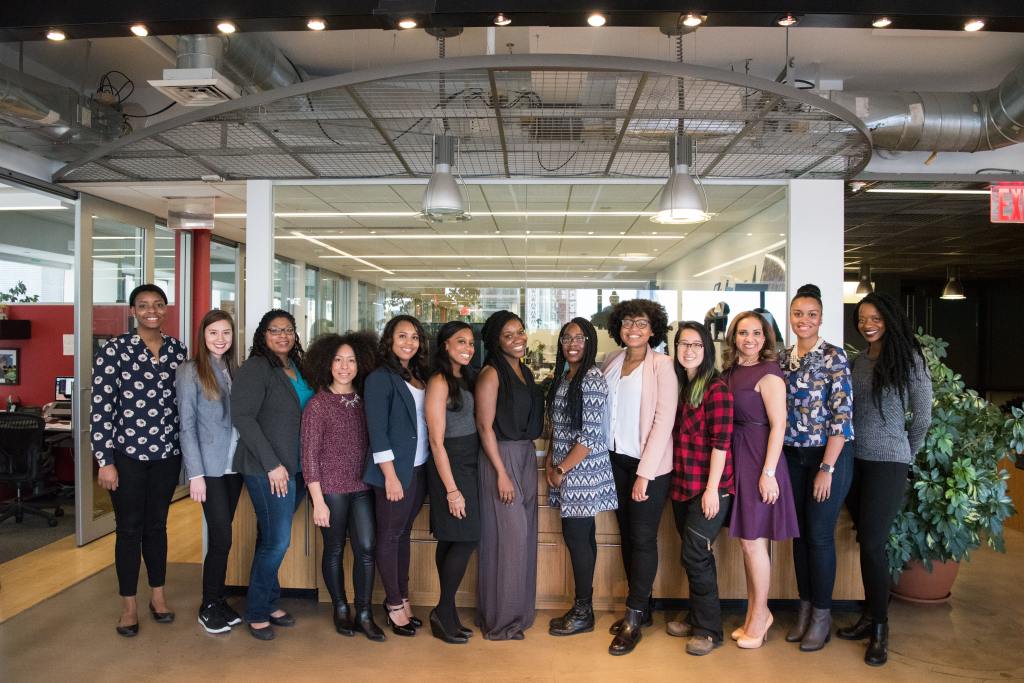
Picture by Christina@wocintechchat.com
- Please provide a good foundation and overview to start the conversation of Diversity?
Diversity – First my frame of reference is that God teaches us in Holy Scripture that the human race is one. As Paul preached to the Athenian philosophers, “From one man God made every nation of the human race, that they should inhabit the whole earth” (Acts 17:26). It is within this greater context of unity that humanity’s diversity rightly appears.
Secondly, this term is fairly new which may be some of the basis for confusion and lack of actions to understand what this requires. Hearing the first definition seems reasonable. A lot of “so-called information” competes for our time. This causes many to just speed read the headlines and oftentimes to form an opinion, to do a public conviction, or to start a rumor. I’ve already introduced the fact that all American stories are not pretty. But there have been and always will be leaders who want to get “Diversity” right.
Commissioner Paul Tagliabue NFL Football Hall of Fame inductee was known for increasing diversity in the league through many national crises. This has been an ongoing need for some and for others a personal destiny.
Many patterns of behavior occur every day across American in schools, workplaces, public venues. Most days we’re OK (not with “it”) but some days you’re not ok with the “its”.
- Please provide definitions.
Diversity is the range of human differences, including but not limited to race, ethnicity, gender, gender identity, sexual orientation, age, social class, physical ability, or attributes, religious or ethical values system, national origin, and political beliefs.
The second diversity definition makes one think that the action or state of inclusion includes both acknowledgement and agreement that diversity is a required structure or state of being.
Diversity is the action of understanding that everyone is unique and recognizing our individual differences. These can be along the dimensions of race, ethnicity, gender, sexual orientation, socio-economic status, age, physical abilities, religious beliefs, political beliefs, or other ideologies.
What does the “E stand for? Conflicted about equity versus equality. We haven’t reached the state of “nirvana” with women or race equality. Equal can be defined mathematically as the same measure, amount, quantity, or number but not so with people. Equality conjures up fairness, treating people the same way as in being impartial. This hasn’t happened in many areas because people control this treatment. Equity is centered around justice as it relates to the law or one’s rights. Today, equity focuses a lot on systemic racism which informs some and divides others. Let me share a recent headline: “White woman who stole $250K gets probation while Black woman who stole $40K goes to jail”. I am reminded about a workplace story but that would make this a bit long. This would be a good conversation starter though for a group discussion.
- What is the issue?
To state the obvious there is a continuing need to take action for accommodating and welcoming people who have been excluded historically, generally based on sexuality, gender or race.
Reducing prejudice and tackling systemic injustice is a must for developing or driving societal norms.
Opinions are not necessarily facts ABOUT PEOPLE OR EVENTS which affects how we co-exist. Opinions become a personal set of beliefs that people will repeat emphatically as if it’s true. Opinions not based on knowledge. If your company does not include the population it’s trying to represent, it will be hard to connect to them. The businesses who pay attention to this will grow in the future. One of my favorite brands who does a good job of embracing this is Proctor and Gamble, headquartered in Cincinnati, OH.
Entrepreneur – Integrating Inclusivity into your organization and workplaces – A carryover comment from our last podcast is that an increased female labor force advances gender equality and a stronger global GDP.
- Why now?
It has become even more important to work towards a culture of transparency and accountability that exists for everyone which facilitates growing, learning and correction.
“The truth is that we must work together to save ourselves politically, save ourselves spiritually and save ourselves physically.” Rev C.T. Vivian
The issues have been on-going and many people who feel they are visible, and we have the opportunity to get this right.
Organizations are competing for the same talent. Diverse talent leads to innovation, equitable post pandemic recovery and a healthier bottom line due to performance and great leaders.
- Since we’re talking about leaders, what must leaders do? –
I heard Janet Stovall on a Ted Talk say you must be single-minded enough to do something about it. If this is a key priority, leadership must lead. Encourage everyone and yourself to speak up to confront racist, unsafe, or illegal practices at work. While the jury is still out, it’s been said that Gov Cuomo had women who enabled his “wrongdoing”. Examples are micro aggressions that deprive an employee of the dignity they deserve.
Staff meetings: Look for teachable moments and follow through with thoughtful discussions.
Put in place zero tolerance, whistleblower protection
Create opportunities for everyone to engage. Put the right people in roles to lead the conversations. Positive actions happening in the Government, some universities and corporation. Time’s Up Foundation
There are organizations that are centralizing their hiring process so that they can root out favoritism and bias. This is a big challenge due to the subjective nature of hiring. EI have reviewed resumes that I knew the individuals at least deserved to be considered for an interview.
One caution that I’ve heard expressed more than once is that if you are creating more women leadership positions that may not necessarily mean you have become a diversified organization. You need to look at the overall makeup of people to identify groups they represent and ensure you create a sense of belonging. Move people around if you must. Ask yourself if your organization represents the local community and have efforts been made to prioritize mentoring, training, and diversified leadership succession planning?
- Personal accountability – What can you or I do?
What can I do? Talk about my identity first image of God, human race, understand history. Speak up. Ask questions. Teaching Respect and Appreciation, NOT Tolerance
- Treat everyone right, which is the same as fairness. Heard the Anderson-Dubose Company owner discuss in brief details about himself. His company is one of the largest black-owned businesses in the country. He said he is a businessperson who happens to be African American who is focused on performance.
- Be informed, by getting information from the ones who are most affected
- Volunteer to lead a discussion group
- Read a book and invite others to share like a book club; story telling is the best when it’s not an opinion
- Any insight about “Emotional Intelligence” types?
Being approachable requires us to take a look first at our own emotions and then monitor how we handle them. This can be a touchy subject and send you into many emotional minefields. The top criteria I think are helpful in this area include:
- Empathy: Sensing other’s emotions, understanding their perspective, and taking an active interest in their concerns.
- Building bonds: Cultivating and maintaining a web of relationships.
- Emotional self-awareness: Ability to read one’s own emotions and recognizing their impact, using “gut sense” to guide decisions.
- Initiative: Readiness to act and seize opportunities.
- Transparency: Displaying honesty and integrity; trustworthiness (workplace situations).
Recap how anyone can maximize actions through participation in conversations:
Leaders or individuals can –
- Develop strategic plans to accomplish the goals and share with your team (Not optional)
- Establish set times to discuss with small and large groups
- Don’t be silent when you see something; be known for taking action
- Schedule the necessary follow up meeting shortly after an occurrence (example)
- Set daily intentions that are both mindful and intentional
Celebrate individuality that lend space for creativity and inclusion. These are AHA Moments that can be shared during award ceremonies, e.g.
- Utilize personal visualization of seeing people as unique contributors (Ask people to share something cultural.)
- Have daily conversations and acknowledge how differences connect
- FOCUS on getting missed opportunities right; share outcomes with everyone
* Divas, Diamonds, and Dollars Podcast, Episode #25, August 29, 2021 Cecelia BenfordLeadershipCoachingMentoringConnections and Larisa Troche, Pink Passport Society.Org #Leadership#Diversity#
 Leadership Coaching Mentoring Connections